Skip to content
Sign in
View from the race motorbike on a wet cobbled road, two riders ahead against the low sun, and the red final-kilometre arch crossing overhead with its pennant hanging.

Live race control

Live race control,
measured along the road.

Every support vehicle on the course in real time. The gap between the lead car and the closing car measured like a timing split, not estimated. And help chosen by the distance the car will actually drive.

The flamme rouge marks the final kilometre. Here it marks the number race control needs: how much is left, measured, not guessed.

Along the road

37.3km

Separated the motorbike from the crash it appeared to be looking at. In a straight line it was 50 metres. The system sent the ambulance that was 1.5 km behind.

No signal

40points

Collected over two minutes with no coverage, they all arrived complete, in order and without duplicates once the signal came back.

To get in

6characters

That is everything the driver types. No account, no app, no hardware to buy and collect afterwards.

KM 12What happens today

The race happens on the radio.
And the radio does not reach the valley.

None of this is the organiser's fault. It is what is left when the only source of position is someone saying, from memory, where they think they are.

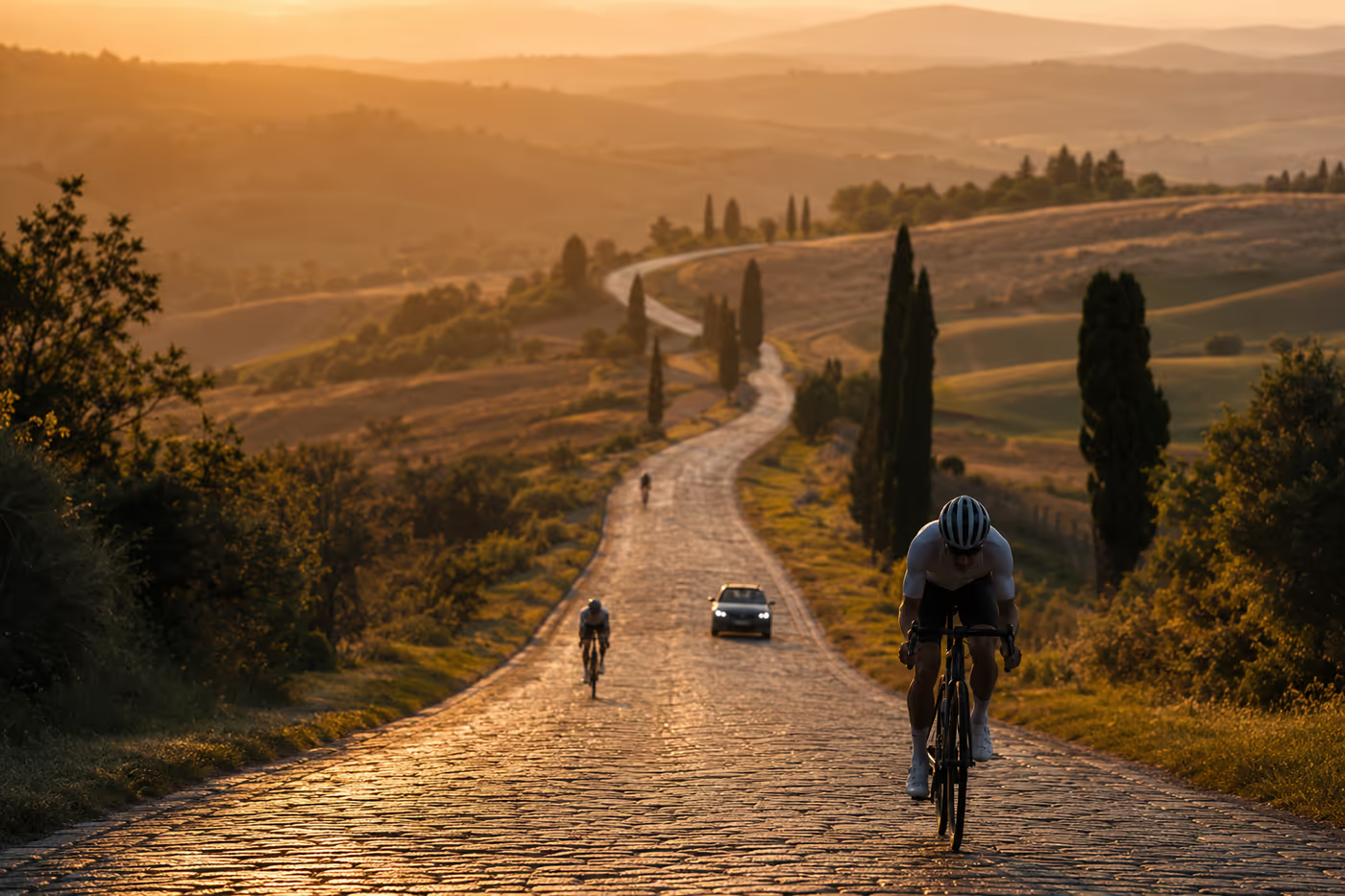
A cobbled road winding between hills at sunset, three riders hundreds of metres apart and a support car in one of the gaps — the race has stopped being a peloton.
  • “Where is the closing car?”

    The answer is an estimate, and the road is reopened on the strength of it — along with the closure window agreed with the traffic authority, met or missed. Ten minutes too long breaks the agreement; ten minutes too short reopens the street before it is safe.

  • “Someone is down at km 60.”

    Who heard it? Who went? While nobody answers on the radio, there is no way to tell “the call never arrived” from “the call arrived and they are on their way”.

  • “Send the nearest support.”

    Nearest measured how? On the paper map the distance is whatever the eye says — and the eye does not know that stretch is the return leg, and that the road only meets itself again 30 km further on.

  • “The driver did not understand.”

    At an international race the support crew speaks four languages. The radio speaks one, and the half-hour briefing before the start is over.

  • “The race is finished.”

    And no record remains of who was where, at what time, when the alert was raised and how long help took. The federation asks later; the crew's memory answers.

KM 34What the road measures

Six engineering decisions
that change what appears on screen.

01

Distance along the road, not as the crow flies.

In a real test, a motorbike was 0.05 km from a crash in a straight line and 37.3 km away along the road — on the return leg of the course, with the only link between the two thirty-seven kilometres further on. The system dispatched the ambulance that was 1.5 km behind, travelling the same way as the race.

A system comparing coordinates would have sent the motorbike, and the motorbike would have taken the whole race to arrive. A vehicle that has already passed the point also pays the price of finding somewhere to turn and driving against the flow — and that asymmetry counts.

  • 0.05 km in a straight line between the motorbike and the crash. This is the number a geometric proximity system uses — and by it the motorbike would be the one sent.
  • 37.3 km along the road, at the same moment: the motorbike is on the return leg and would have to drive the whole loop back against the race.
  • 1.5 km behind, on the same leg and travelling the same way: the ambulance, which is the one the system dispatched.

Diagram not to scale. Numbers measured on a real test course.

02

The lead↔closing gap is measured, not estimated.

measured

The system records what time the lead car passed each point of the course. When the closing car reaches km 42, the gap is the difference between two observed times — the same arithmetic as a timing split. That is the number the organisation agreed with the traffic authority: it is the closing car's passage that gives the road back to traffic. When there is not enough history yet, the screen says “projected” and gives the reason. The director never has to guess which of the two they are reading.
03

It works with no signal.

40 points

Nothing is sent before it is written to the device, and nothing leaves the queue before the server confirms receipt. In a two-minute test with no coverage, all 40 stored points arrived complete, in order and without duplicates as soon as the signal returned.

04

An alert never fails in silence.

local queue

An alert jumps the queue ahead of any GPS ping and is retried until the server confirms it — a call for help is never dropped, even if that means a queue that will not empty. And the right help is dispatched by category, with nobody having to choose in the middle of the emergency: a crash calls the ambulance, a mechanical calls the mechanic.

05

Any phone becomes the vehicle's GPS.

6 characters

The driver opens the link, types the 6-character code printed on the briefing sheet, and their phone becomes that vehicle's tracker. No app to install, no hardware to buy, charge, hand out and collect at the end of the day.

06

Six languages, a single link.

6 languages

The language is not in the URL — the device negotiates it. The same link and the same printed QR give Portuguese to the Brazilian driver, Italian to the Italian and German to the Austrian, with race control managing nothing. A phone set to pt-PT gets Portuguese, not English.

KM 96How it works

Three steps before the start.
None during.

  1. Step 1

    Load the course.

    The race GPX, or the line drawn on screen. The course is indexed once, and every distance measured afterwards comes from it — each vehicle's position, the gap and the choice of who to send.

  2. Step 2

    Print the code sheet.

    One 6-character code per vehicle, with each one's role: lead, closing, broom wagon, ambulance, mechanic, motorbike, marshal. The sheet comes out ready to print and hand over at the briefing.

  3. Step 3

    Open the panel on the day.

    Each driver opens the link, types the code and appears on the map in their own phone's language. During the race there is nothing left to configure.

KM 124The two screens

One race control room.
One phone per vehicle.

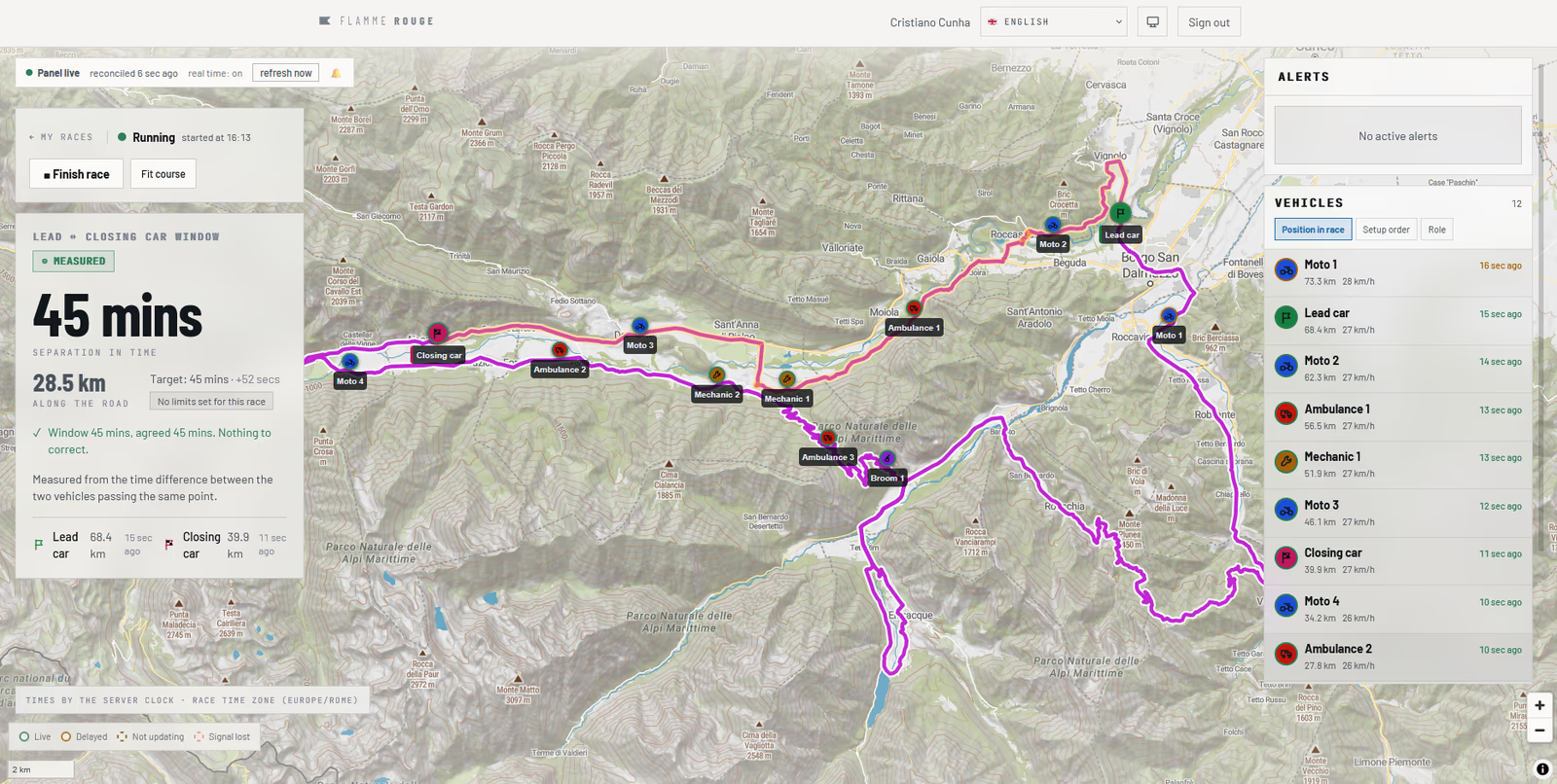
Screenshot · race control panel16:10 · máx 220 KB · avif / webp · 1600 px
Race control panel

What race control sees

  • Live map with every vehicle, each role in its own colour and with the age of its data.
  • The gap between lead and closing car, marked as measured or projected.
  • Alert queue with the nearest support already suggested — and the reason for the suggestion in writing.
  • Connection health vehicle by vehicle: who is live, who is late, who has gone quiet.
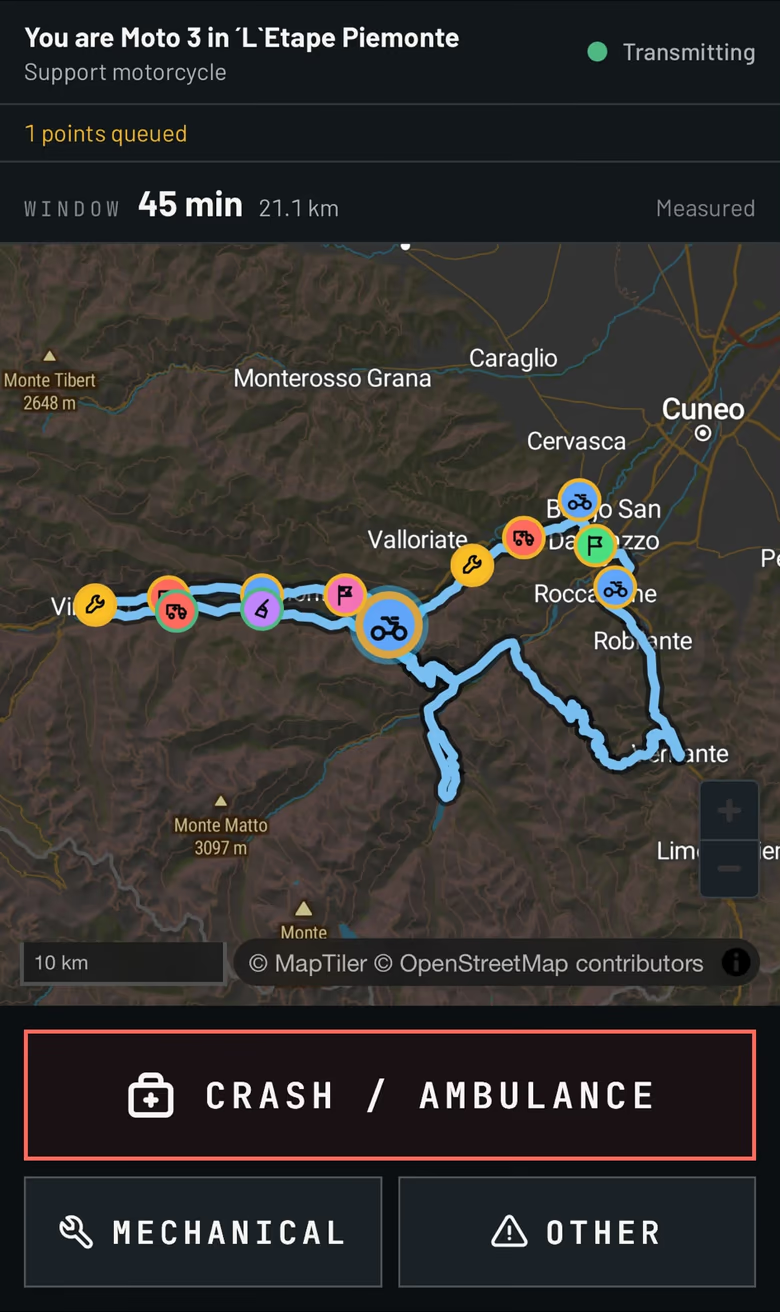
Screenshot · driver app39:80 · máx 140 KB · avif / webp · 780 px
Driver app

What the driver sees

  • Enters with the 6-character code. No account, no app store.
  • Large alert buttons, for a gloved hand in a moving car.
  • Keeps sending with the screen off and stores everything when the signal drops.
  • In the phone's own language, from the same link everyone received.
Flamme Rouge — live race control for road cycling